

Uganda receives mobile biosafety laboratory to strengthen response to Ebola outbreak
The mobile laboratory forms part of efforts to strengthen Uganda’s public health emergency preparedness following lessons from recent Ebola outbreaks.
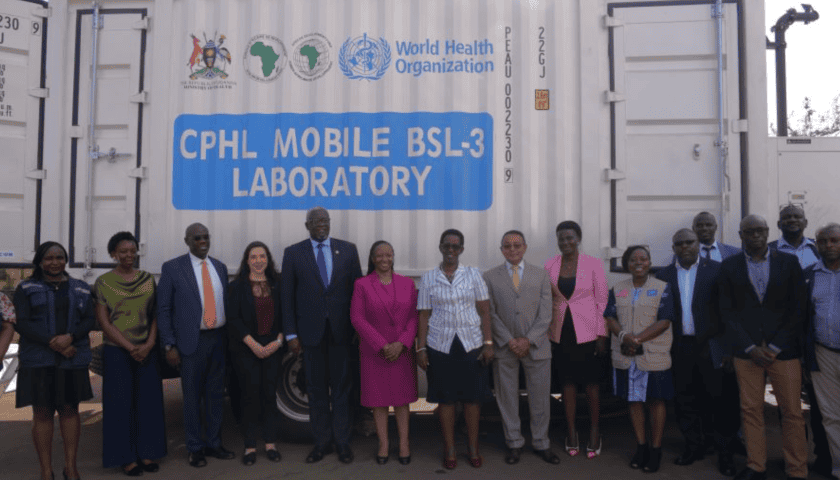
UGANDA—The World Health Organization (WHO), with funding from the African Development Bank (AfDB), has handed over a truck-mounted Biosafety Level 3 (BSL-3) mobile laboratory valued at more than US$500,000 to the Government of Uganda.
The facility will strengthen the country’s capacity to detect and respond rapidly to Ebola and other highly infectious diseases.
Expanding field-based diagnostic capacity
The mobile laboratory forms part of efforts to strengthen Uganda’s public health emergency preparedness following lessons from recent Ebola outbreaks.
It will enable health authorities to conduct diagnostic testing closer to outbreak sites, reducing the time needed to transport samples to centralized laboratories.
By bringing high-containment testing capacity directly to affected communities, the facility will improve access to diagnostic services in remote and hard-to-reach areas.
This capability will be particularly important at outbreak epicentres, where rapid confirmation of suspected cases can support faster investigation, treatment and implementation of measures to contain transmission.
Rapid diagnostic testing remains a critical component of outbreak response. Delays in confirming infections can slow disease surveillance and public health interventions, particularly when outbreaks occur far from established laboratory facilities.
The new mobile laboratory is therefore designed to shorten turnaround times while supporting safer collection, handling and testing of potentially infectious samples.
Equipped for high-risk pathogens
The truck-mounted facility is equipped for high-containment laboratory operations and includes specialized diagnostic equipment for the safe processing and testing of high-risk pathogens in challenging field environments.
Its deployment will strengthen Uganda’s ability to respond to Ebola virus disease and other public health emergencies that require advanced laboratory testing.
Dr Diana Atwine, Permanent Secretary at Uganda’s Ministry of Health, said the government remains committed to strengthening the country’s capacity to respond effectively to public health emergencies.
“This mobile laboratory enhances our ability to reach communities quickly during outbreaks, especially in areas where access to specialized diagnostic services may be limited,” Atwine said.
She also welcomed the partnership between WHO and the AfDB, describing it as an important contribution to Uganda’s efforts to build a healthier and more resilient population.
Strengthening health security
Speaking during the handover ceremony, WHO Representative to Uganda Dr Kasonde Mwinga reaffirmed WHO’s support for Uganda’s efforts to build resilient health systems and strengthen outbreak preparedness and response.
“The handover of this laboratory represents much more than the transfer of a physical asset,” Mwinga said.
“It reflects our shared commitment to ensuring that Uganda remains better prepared to detect, investigate and respond rapidly to public health threats wherever they occur.”
He added that the facility would support faster decision-making during emergencies while strengthening Uganda’s broader health security infrastructure.
The handover follows Uganda’s declaration of the end of its latest Ebola outbreak and forms part of ongoing efforts to maintain preparedness for Ebola and other epidemic-prone diseases.
By expanding diagnostic capacity at the field level, the laboratory will enable health authorities to investigate suspected outbreaks more quickly and initiate appropriate response measures.
The investment also supports Uganda’s efforts to strengthen national capacities under the International Health Regulations, particularly in emergency preparedness, surveillance, and response.
The collaboration between the Government of Uganda, WHO, and the AfDB is expected to reinforce the country’s laboratory preparedness and emergency response capabilities.


Be the first to leave a comment