

Africa CDC selected to represent global regional health bodies on WHO task force
The Task Force will develop options and recommendations for consideration by the Eightieth World Health Assembly.
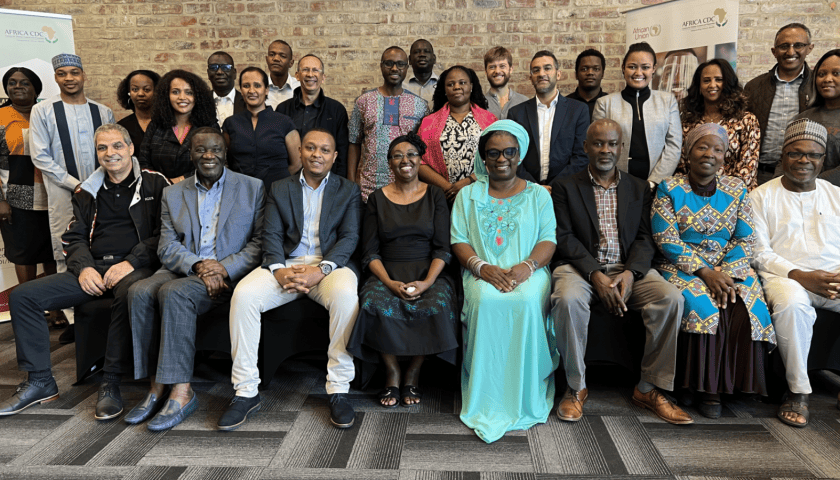
ETHIOPIA—The Africa Centres for Disease Control and Prevention (Africa CDC) has been selected to represent regional health organizations worldwide on the Joint Task Force on Global Health Architecture Reform.
Several regional health organizations were considered for the position, with Africa CDC chosen as their representative.
The World Health Organization (WHO) formally invited H.E. Dr Jean Kaseya, Director General of Africa CDC, to join the Task Force.
“We receive this recognition with humility and with a clear understanding of the responsibility it carries,” Dr Kaseya said.
“Our first responsibility is to bring forward the priorities and perspectives of our 55 African Union Member States.”
Shaping global health reform
The Joint Task Force is part of a member state-led process to reform the global health architecture.
It was established following the decision of the Seventy-ninth World Health Assembly on global health architecture reform and the UN80 Initiative.
The Task Force will develop options and recommendations for consideration by the Eightieth World Health Assembly.
Its work will examine how global health institutions can collaborate more effectively at national, regional, and global levels.
The review will focus on the functions, mandates and capacities of global health institutions, as well as coordination, decision making and financing for global health priorities.
Africa CDC will base its contribution on the priorities of its 55 African Union Member States, working through the African High Level Ministerial Committee on Global Health Architecture Reform (AHLMC).
The committee provides a platform for African governments to develop common positions and strengthen the continent’s voice in global health governance.
“Africa has been clear about the direction global health reform must take,” Dr Kaseya said.
“We need a system that places countries at the centre, recognizes and strengthens the role of regional institutions, advances greater equity and sustainable financing, and reinforces health security and sovereignty.”
Regional perspectives
Africa CDC will also consult other regional health organizations to ensure their experiences and priorities inform the Task Force’s discussions.
“The responsibility entrusted to Africa CDC extends to listening carefully to our sister regional health organizations and ensuring their perspectives are reflected at the table,” Dr Kaseya said.
He added that regional institutions bring knowledge, proximity and experience that can help create a global health system that responds more effectively to countries and communities.
Dr. Kaseya will represent Africa CDC at the Task Force’s first full in-person meeting, scheduled for September 3 to 4, 2026, at WHO headquarters in Geneva, Switzerland.
WHO has also invited Africa CDC to nominate a technical focal point to support its participation.
Africa CDC technical team
To coordinate Africa CDC’s technical engagement, Dr Kaseya has designated Dr Ngashi Ngongo to work with Professor Aliko Baba Ahmed, Special Regional Representative of the Director General for the Western Africa Regional Collaborating Centre.
Dr. Alex Coutinho, Program Director for the Kofi Annan Global Health Leadership Program at Africa CDC, will provide legal support.
The team will work with relevant Africa CDC directorates and technical experts throughout the process.
This approach will draw on expertise across the organization while keeping its contributions aligned with priorities set by African Union Member States.
Africa CDC’s participation builds on efforts to strengthen Africa’s role in global health governance.
In April 2026, during the World Health Summit Regional Meeting, the agency supported African ministers in launching the AHLMC to consolidate continental priorities and strengthen political coordination on global health reform.
“This selection is an important recognition of the growing role of Africa and its institutions in shaping global health,” Dr Kaseya said.
“It is also a responsibility to demonstrate that regional institutions can contribute constructively to building a global health architecture that works better for countries and communities.”
The Joint Task Force is co-chaired by Dr. Yong Feng and Mr. Björn Kümmel.
Be the first to leave a comment