

Amberstone Biosciences partners with Henlius on tumour-activated T-cell engagers
T cell engagers are designed to bring a patient’s T cells into contact with cancer cells, enabling the immune cells to attack the tumour.
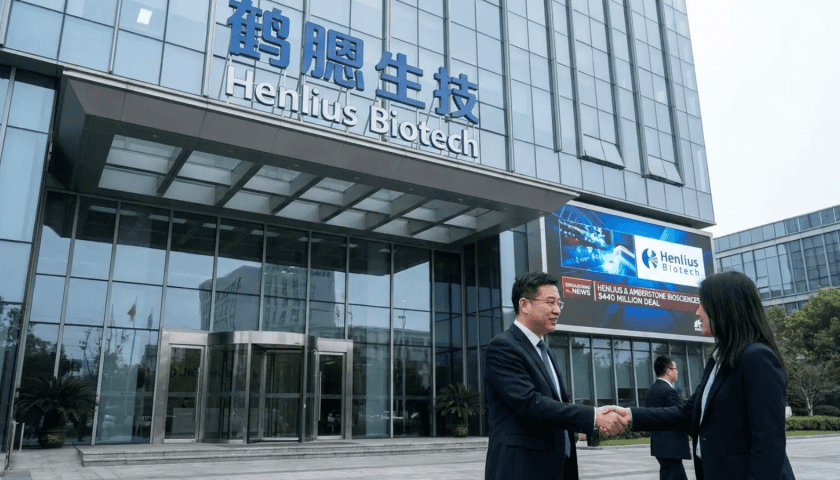
CHINA—Amberstone Biosciences has partnered with Shanghai Henlius Biotech to develop conditionally activated T cell engager candidates for solid tumours.
The agreement gives Henlius rights to select up to two targets and advance them through global research, development, manufacturing, and commercialisation.
Deal terms and development plans
Under the partnership, Amberstone will receive an upfront payment and research funding.
It is also eligible for development, regulatory and sales milestones of up to US$440 million for each target, in addition to tiered royalties on net sales.
Henlius will select the targets covered by the agreement and oversee their subsequent development and commercial activities.
The arrangement expands the use of Amberstone’s Tumor Microenvironment Activated ThErapeutics, or T MATE, platform, which is designed to activate T cell engagers selectively within the tumour microenvironment.
Amberstone’s lead T MATE T cell engager is expected to enter clinical development in the first half of 2027.
The programme is currently undergoing investigational new drug enabling studies, while other internal candidates remain at the discovery stage.
Addressing solid tumour challenges
T cell engagers are designed to bring a patient’s T cells into contact with cancer cells, enabling the immune cells to attack the tumour.
However, their development for solid tumours has faced safety challenges, including cytokine release syndrome and on target, off tumour toxicity.
Amberstone said its T MATE platform uses reversible pH gating to regulate T cell engager activity according to the local tumour environment.
The company is developing the technology with the aim of reducing T cell activation in the bloodstream and healthy tissues while retaining activity under the pH conditions found in solid tumours.
According to Amberstone, preclinical studies showed potent tumour cell killing under tumour like pH conditions, while activity was substantially lower at physiological pH.
These findings form part of the preclinical package supporting the company’s ongoing development programmes.
Strategic partnership
The agreement provides Henlius with access to a platform focused on conditionally activated T cell engagers, while Amberstone gains a development and commercialisation partner with capabilities across the biopharmaceutical value chain.
Amberstone is developing pH gated, tumour activated T cell engagers and other antibody therapeutics through internal programmes and external partnerships.
Its pipeline includes programmes at different stages of discovery and preclinical development.
Henlius has capabilities spanning clinical operations, research and development, manufacturing, commercialisation and regulatory affairs.
The company reports that 10 of its products have received regulatory approvals across more than 60 countries and regions, including four approved by the US Food and Drug Administration and five by the European Commission.

Be the first to leave a comment