

Nigeria confirms imported Ebola Bundibugyo case in Abuja
Nigeria is the fifth country to detect the virus since the Democratic Republic of the Congo (DRC) declared an outbreak on 15 May 2026.
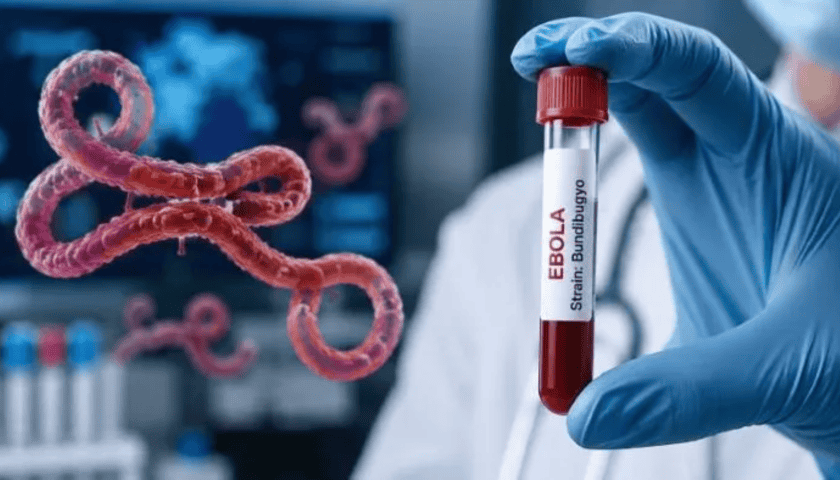
NIGERIA—Nigeria has confirmed an imported case of Ebola Bundibugyo virus disease in Abuja, prompting an emergency response to trace contacts and prevent further transmission.
The Federal Ministry of Health and Social Welfare reported that the patient is a woman who recently travelled from Uganda.
Her symptoms began on 7 October, four days after she arrived in Nigeria.
She sought treatment at a private health facility in Abuja on 11 October, and laboratory testing confirmed Bundibugyo virus infection on 20 October.
She remains in isolation and is receiving medical care.
Investigations are underway to determine the likely source of infection and establish the patient’s full travel and exposure history.
Nigeria is the fifth country to detect the virus since the Democratic Republic of the Congo (DRC) declared an outbreak on 15 May 2026.
Contact tracing and emergency response
The ministry has identified 44 contacts and placed them under monitoring as authorities work to identify other people who may have been exposed.
Health officials are also strengthening infection prevention and control measures at the private facility where the patient initially sought care.
The Nigeria Centre for Disease Control and Prevention has activated its incident management system to coordinate the response.
Priorities include identifying suspected cases, tracing and monitoring contacts, and enforcing infection prevention and control protocols to limit transmission within healthcare facilities and the wider community.
The World Health Organization (WHO) and its partners are supporting Nigerian health authorities with case investigations, contact tracing, infection prevention and control, and essential medical supplies, including personal protective equipment for healthcare workers.
Regional preparedness and healthcare implications
WHO has urged countries across the region to maintain readiness as the outbreak in the DRC continues to evolve.
Kenya has also reported nine cases linked to an imported infection in recent weeks, underscoring the need for coordinated surveillance and response across borders.
WHO recommends that countries strengthen disease surveillance and investigate alerts promptly. Laboratories must be equipped to test suspected cases safely, while rapid response and clinical teams should remain ready for immediate deployment.
Health authorities should also reinforce infection prevention and control in public and private healthcare facilities, maintain essential supplies, engage communities and strengthen monitoring at points of entry.
For healthcare systems, imported cases increase the need for reliable diagnostic capacity, trained laboratory personnel, adequate protective equipment and effective coordination between public health agencies and private healthcare providers.
Early detection and timely contact tracing remain central to limiting exposure among healthcare workers, patients and communities.
WHO has advised against restricting travel to or trade with affected countries.
The organisation continues to monitor and, where necessary, verify travel and trade measures introduced in response to the outbreak.
It is also regularly reassessing its risk assessment as new information becomes available.


Be the first to leave a comment