
Nigeria partners with BioVana to build National Cancer Biobank Network
NICRAT provides national leadership, institutional coordination and oversight, while BioVana is responsible for technical implementation.
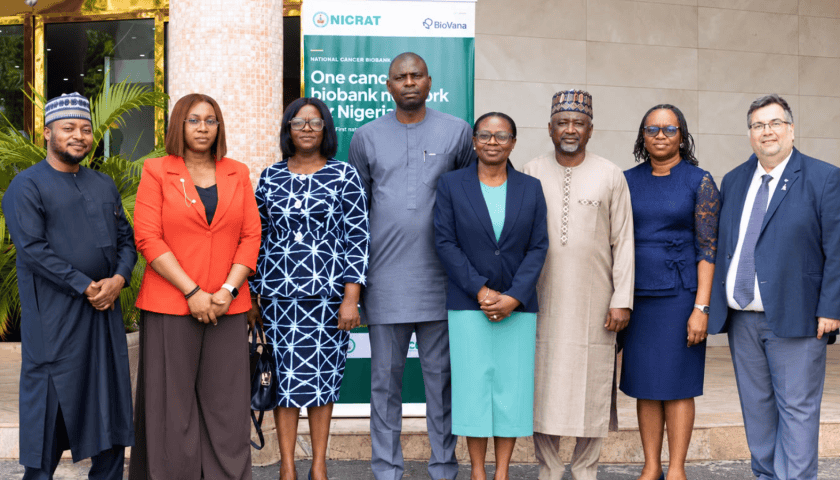
NIGERIA – BioVana, a health data infrastructure company, has partnered with the National Institute for Cancer Research and Treatment (NICRAT) to establish a coordinated National Cancer Biobank Network (NCBN), strengthening cancer research and precision oncology across Nigeria.
The initiative builds on a memorandum of understanding signed by the two organisations in 2025.
It currently connects eight federal hospitals across Nigeria’s six geopolitical zones, with an initial target of collecting and cataloguing 10,000 cancer biospecimens.
The partners aim to expand the network to 100,000 samples by 2028.
NICRAT provides national leadership, institutional coordination and oversight, while BioVana is responsible for technical implementation.
Its work includes developing digital infrastructure, standardising sample collection and data management, training participating institutions and establishing systems that support biomedical research.
Standardising cancer research infrastructure
The partners have completed initial assessments of participating hospitals and convened a stakeholder workshop involving representatives from the World Health Organization (WHO) and the International Society for Biological and Environmental Repositories (ISBER).
These activities are supporting efforts to harmonise biobanking procedures and introduce common data management and quality standards across the network.
Founded in 2025 by Estelle Dogbo and Dr Jumi Popoola, BioVana develops infrastructure that connects African research institutions with the international scientific community.
Its platform aims to make locally collected biomedical data more accessible for research and drug discovery, while addressing the underrepresentation of African populations in global biomedical studies.
BioVana Co-Founder and CEO Estelle Dogbo said Nigeria already has substantial cancer research resources distributed across different institutions.
The NCBN will connect these resources through shared standards, governance frameworks and digital systems, making them more accessible for scientific research.
She also said the company hopes the network will provide a model for developing coordinated biomedical research infrastructure in other African countries.
NICRAT Director General Professor Aliyu Malami Usman said the initiative would lay the groundwork for a sustainable national cancer research system.
Its longer-term ambition includes establishing a central national cancer biobank supported by participating institutions.
The partnership will help develop the technical standards, institutional capacity and operational systems needed to support this expansion.
Strengthening African representation in cancer research
ISBER President Dr Stella Somiari said standardised biobanking would enable Nigerian institutions to collaborate with international research partners while protecting research participants and their communities.
She noted that locally collected biospecimens and associated data could help African researchers contribute to global studies and generate evidence relevant to cancer care in Nigeria.
Similarly, Dr Zisis Kozlakidis, Group Head of Laboratory Support, Biobanking and Services at the International Agency for Research on Cancer (IARC), said connected research infrastructure would allow samples and data from African populations to contribute more meaningfully to global scientific discovery.
He highlighted the importance of shared standards, local expertise and sustainable biobanking systems in making cancer research more representative.
According to Africa Cancer Control Partners, Africa recorded more than one million new cancer cases in 2020, with the annual figure projected to reach two million over the following 15 years.
This growing disease burden underscores the need for stronger research infrastructure to support disease surveillance, biomarker discovery and the development of more targeted treatments.
The next implementation phase will focus on training personnel at the eight participating hospitals, harmonising sample collection and storage procedures, introducing common data and quality standards, and recruiting the first 10,000 cancer biospecimens.
Be the first to leave a comment