

Aga Khan University Hospital performs first documented full-arm replantation in East Africa
The procedure involved specialists from Plastic and Reconstructive Surgery, Orthopaedic Surgery, Vascular Surgery, Anaesthesia and Critical Care.
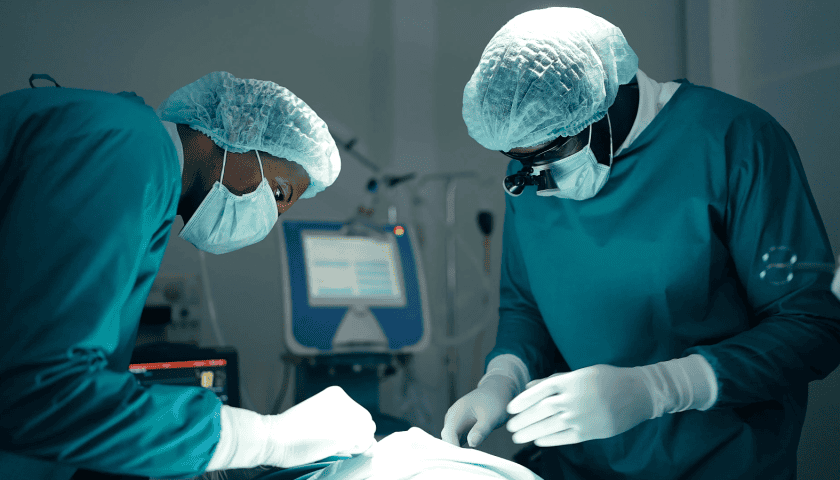
KENYA—Aga Khan University Hospital has successfully reattached a patient’s completely amputated right arm following a severe industrial accident in a 10-hour operation, marking the first documented full-arm replantation procedure in East Africa.
The patient was rushed to the hospital for emergency treatment, where clinicians stabilised his condition before preparing him for surgery.
Given the severity of the injuries, the hospital assembled a multidisciplinary surgical team to perform the complex procedure.
Multidisciplinary surgical intervention
Dr Esther Gathura, Section Head and Consultant Plastic, Hand and Reconstructive Surgeon at Aga Khan University Hospital, said the operation required specialised microsurgical skills, precise coordination and rapid intervention to restore blood circulation and preserve the limb.
Unlike finger or hand replantation, full-arm reattachment involves reconnecting several structures, including bones, muscles, tendons, blood vessels and major nerves.
Surgeons must also manage the risk of complications while prioritising the patient’s overall condition.
The procedure involved specialists from Plastic and Reconstructive Surgery, Orthopaedic Surgery, Vascular Surgery, Anaesthesia and Critical Care.
The orthopaedic team, led by Dr Edward Jenner, Consultant Orthopaedic Surgeon, was responsible for restoring and stabilising the arm’s skeletal structure to support the reconstruction.
Dr Jenner noted that successful replantation depends on restoring the underlying bone structure and carefully reconnecting damaged tissues.
He highlighted the importance of coordination between surgical disciplines in managing severe traumatic injuries.
Recovery and rehabilitation
Following the operation, the patient remained under intensive care monitoring before being transferred to a lower level of care.
His condition is currently stable, and the reattached arm remains viable, with good blood circulation.
The patient has also started early rehabilitation to support the gradual recovery of movement and sensation.
According to Dr Gathura, the clinical team is encouraged by the progress made so far.
The procedure builds on the hospital’s experience in complex reconstructive surgery.
Earlier in 2026, the facility successfully reattached three amputated fingers belonging to a woman injured in a workplace accident.
The patient subsequently recovered and returned to her normal activities.
Implications for specialised surgical care
The achievement highlights the growing capacity of private and specialist hospitals in Kenya to manage complex trauma cases that require advanced surgical equipment, microsurgical expertise and coordinated postoperative care.
For the healthcare industry, the procedure also draws attention to the importance of strengthening specialised surgical services, emergency referral systems and rehabilitation capacity.
Such interventions require significant investment in trained personnel, operating facilities and critical care infrastructure, particularly as hospitals seek to manage more complex cases within the region.
Be the first to leave a comment