

South Africa launches CSIR FuturePharma facility to boost local pharmaceutical manufacturing
FuturePharma will support the development, scale up and production of pharmaceutical technologies, helping to address a persistent challenge in the industry: translating scientific discoveries into products that can be manufactured commercially.
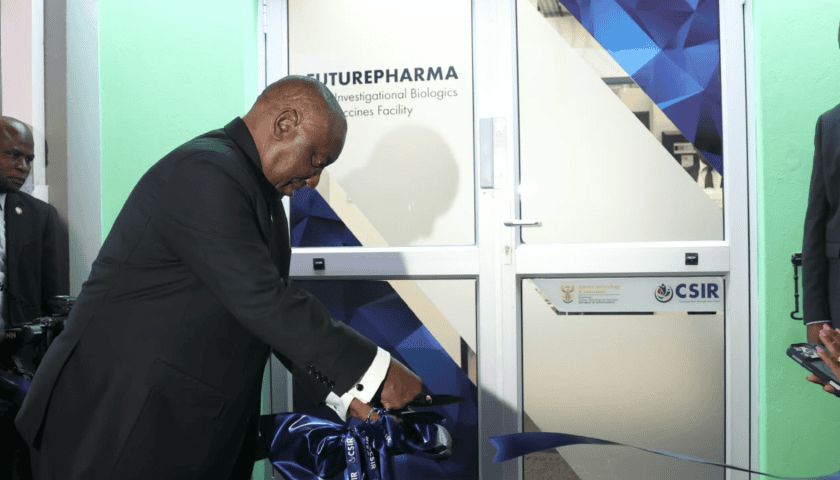
SOUTH AFRICA—President Cyril Ramaphosa has launched the Council for Scientific and Industrial Research’s (CSIR) FuturePharma facility in Pretoria to strengthen domestic pharmaceutical research, innovation and manufacturing capacity.
The open access facility aims to help researchers, innovators and pharmaceutical companies develop and manufacture active pharmaceutical ingredients (APIs) and other pharmaceutical technologies.
It will provide specialised infrastructure and technical expertise to move promising research from laboratories towards commercial production, supporting South Africa’s efforts to build a more resilient pharmaceutical industry.
The launch marks an investment in the country’s science, technology and innovation capabilities, with implications for medicine security, industrial development and preparedness for future health emergencies.
Bridging pharmaceutical research and manufacturing
FuturePharma will support the development, scale up and production of pharmaceutical technologies, helping to address a persistent challenge in the industry: translating scientific discoveries into products that can be manufactured commercially.
Through its open access model, the facility will allow researchers, universities, startups, and established pharmaceutical companies to access specialised equipment and expertise that may be costly to establish independently.
This arrangement could encourage collaboration between research institutions and industry while helping smaller innovators advance their technologies towards commercialisation.
The facility is also intended to strengthen local API production, an important component of pharmaceutical manufacturing.
APIs are the substances responsible for the therapeutic effects of medicines, and reliable access to them is essential for producing finished pharmaceutical products.
Expanding domestic capabilities could help reduce reliance on imported pharmaceutical ingredients and improve the resilience of medicine supply chains.
However, translating this potential into greater local production will depend on the technologies developed, manufacturing capacity, investment and demand from pharmaceutical companies.
Lessons from the COVID-19 pandemic
The COVID-19 pandemic exposed the risks associated with dependence on international suppliers for essential medicines, pharmaceutical ingredients and other health products.
Disruptions to global supply chains highlighted the importance of developing regional manufacturing capabilities that can respond to changing health needs.
FuturePharma is expected to contribute to South Africa’s preparedness for future pandemics and other public health emergencies by strengthening its ability to develop and manufacture pharmaceutical products locally.
For the wider African continent, expanded pharmaceutical research and manufacturing could also create opportunities for regional partnerships, more diversified supply chains, and greater participation in the production of essential medicines.
These benefits will depend on cooperation between governments, research institutions, manufacturers and regulators across the region.
Parliamentary committee highlights investment in science
Ms Lusizo Makhubela, Chairperson of Parliament’s Portfolio Committee on Science, Technology and Innovation, attended the launch and highlighted the importance of sustained investment in scientific research and industrial capability.
Makhubela said facilities such as FuturePharma strengthen the country’s ability to translate scientific knowledge into products, industrial capacity and practical solutions to societal challenges.
She also emphasised their potential contribution to skills development, innovation, and sustainable economic growth.
The committee noted that infrastructure alone would not guarantee these outcomes.
Continued funding for research and development, specialised personnel, equipment maintenance and facility operations will be necessary to sustain progress.
Partnerships with universities, investors, pharmaceutical manufacturers and other research institutions will also be important in moving technologies from early research to commercial production.
Regulatory oversight will remain another critical factor.
Pharmaceutical products must meet established quality, safety and manufacturing requirements, while efficient and predictable regulatory processes can help viable technologies reach the market without compromising patient safety.
The Portfolio Committee said it would continue examining how investment in science, technology, and innovation infrastructure could strengthen South Africa’s National System of Innovation and support economic and social development.


Be the first to leave a comment