

Epinova Health partners with University of Ilorin’s Malaria Club to strengthen malaria surveillance in Africa
According to the World Health Organization’s (WHO) World Malaria Report 2025, an estimated 282 million malaria cases and 610,000 deaths occurred worldwide in 2024.
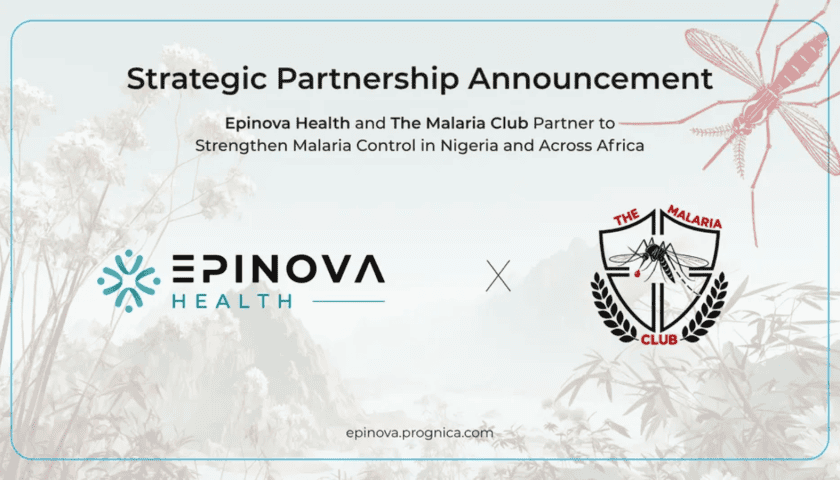
NIGERIA—Epinova Health has partnered with The Malaria Club at the University of Ilorin, Nigeria, to improve malaria surveillance, identify high-risk communities, and support targeted public health interventions across Africa.
According to the World Health Organization’s (WHO) World Malaria Report 2025, an estimated 282 million malaria cases and 610,000 deaths occurred worldwide in 2024.
The WHO African Region accounted for 94% of cases and 95% of deaths, with children under five representing approximately 75% of malaria deaths in the region.
Nigeria alone accounted for 31.9% of malaria deaths in the region.
Developing location-specific malaria intelligence
Against this backdrop, the partnership will explore ways to translate disease data into practical intelligence that helps health authorities, researchers and implementing organizations direct resources towards communities most affected by malaria.
The proposed work includes mapping malaria hotspots using historical disease patterns and environmental data, identifying underserved populations, and developing localized risk maps to support intervention planning.
The partners will also assess whether changes in disease patterns and environmental conditions could provide early warning of increased transmission.
Other areas of interest include developing indicators to monitor intervention performance, identify implementation gaps and inform programme improvements.
Initial activities will focus on assessing the feasibility of these approaches and validating findings against local public health conditions before wider implementation.
Khalid Shaikh, Founder and CEO of Epinova Health, said the partnership aims to make disease intelligence more useful to public health teams by helping them identify high-risk communities, anticipate emerging threats and prioritize resources.
He emphasized that the focus would be on developing practical tools and evidence to support decision-making, rather than introducing technology without assessing its value in real-world public health settings.
Professor Olugbenga Mokuolu, Advisor to the initiative, highlighted persistent gaps in malaria surveillance, timely risk identification and resource allocation.
He said the collaboration would explore approaches that connect research with disease monitoring and programme implementation, while ensuring that scientific validation and local community needs guide the work.
Research, capacity building and community engagement
The organizations also plan to explore joint operational research, scientific publications, programme evaluations and collaborative funding opportunities.
An initial malaria intelligence pilot could be established in a mutually agreed location, subject to stakeholder consultations, relevant approvals and project agreements.
Community participation will form another part of the collaboration.
The Malaria Club’s academic and community networks could help identify local health priorities, engage stakeholders and coordinate field validation.
Proposed capacity-building activities include training public health professionals and researchers in disease surveillance, geographic risk assessment, data interpretation and the responsible use of public health intelligence tools.
Joint research and educational initiatives could also give students and early-career researchers practical experience in epidemiological analysis and programme evaluation.
Dr. Kolapo Ibrahim Olajide, President of The Malaria Club, said the partnership would seek to identify communities facing the greatest malaria risks and strengthen the evidence available to local health teams.
He noted that the initiative would build on the club’s work in public health education, youth participation and community engagement, while creating opportunities for young African researchers to contribute to malaria research and control efforts.


Be the first to leave a comment