GE HealthCare leverages MIM software to advance personalized oncology with Mayo Clinic
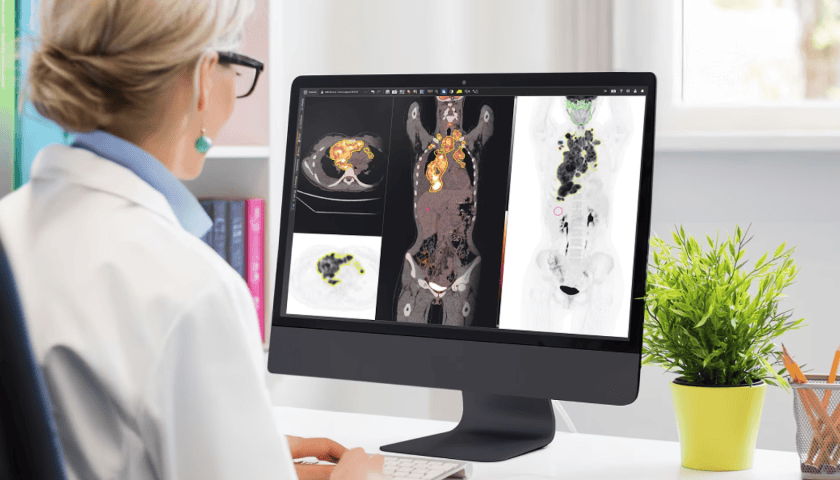
Researchers will use GE HealthCare’s StarGuide SPECT/CT imaging system together with MIM Software’s MIM LesionID Pro platform to monitor how tumours respond throughout treatment.
Published
USA—GE HealthCare and Mayo Clinic have launched a new research collaboration to develop a more personalised approach to radioligand therapy (RLT) for patients with advanced prostate cancer.
The initiative will explore whether imaging and biomarker data can help clinicians tailor treatment according to each patient’s response instead of following a fixed treatment schedule.
Radioligand therapy is an emerging form of precision medicine that combines diagnostic imaging with targeted radiation treatment.
The therapy uses a radioactive isotope attached to a molecule that binds to specific proteins on cancer cells.
Once administered through an intravenous infusion, the treatment delivers radiation directly to tumours while limiting damage to surrounding healthy tissue.
The collaboration centres on the Molecular Imaging Biomarker-Based End of Therapy Trial (MI-BET).
Researchers will use GE HealthCare’s StarGuide SPECT/CT imaging system together with MIM Software’s MIM LesionID Pro platform to monitor how tumours respond throughout treatment.
MIM Software became part of GE HealthCare in 2024.
Imaging and biomarkers to guide treatment decisions
The study will combine imaging findings with clinical outcomes and blood-based biomarkers to identify patterns that predict how patients respond to therapy.
Researchers hope these insights will help physicians adjust treatment earlier, including determining whether some patients may benefit from pausing therapy based on disease response.
GE HealthCare and Mayo Clinic also expect the project to support the development of predictive biomarkers that could identify likely treatment outcomes before or during the early stages of therapy.
Such information may enable clinicians to make more informed decisions while avoiding unnecessary treatment cycles for some patients.
The MI-BET study builds on the organisations’ Strategic Radiology Research Alliance, established in 2023 to accelerate innovation in medical imaging, theranostics and other advanced cancer care technologies.
Their partnership has since expanded to include the GEMINI-RT initiative, which focuses on integrating imaging, artificial intelligence and patient monitoring to improve radiation therapy.
Sergio Calvo, global general manager of theranostics at GE HealthCare, said adaptive and personalised theranostics require strong clinical evidence and a deeper understanding of individual patient responses.
He added that the collaboration will explore how imaging and data-driven insights can support more personalised treatment decisions and encourage wider adoption of precision oncology.
Dr Geoffrey Johnson, chair of the radiopharmaceutical trial team at Mayo Clinic Comprehensive Cancer Center, said evaluating patient response earlier during treatment could generate evidence that reduces unnecessary therapy while expanding access to advanced theranostic care.
Growing radioligand therapy market
Radioligand therapy has become one of the fastest-growing areas in oncology.
Novartis pioneered the field after securing the first US approval for Lutathera (lutetium Lu 177 dotatate) in 2018.
Its second approved RLT, Pluvicto (lutetium Lu 177 vipivotide tetraxetan), has further strengthened the company’s oncology portfolio.
According to GlobalData, Lutathera is projected to generate US$1.1 billion in revenue by 2031, while Pluvicto is forecast to reach US$5.1 billion by the same year.
Sign up HEREto receive our email newsletters with the latest news and insights from Africa and around the world, and follow us on LinkedInfor updates.



Be the first to leave a comment