

Kenya’s JOOTRH hits 700 neurosurgery milestone with Kisumu Neuroscience Initiative
The partners are now strengthening the programme to increase access to complex neurosurgical procedures while building local capacity to provide specialist care.
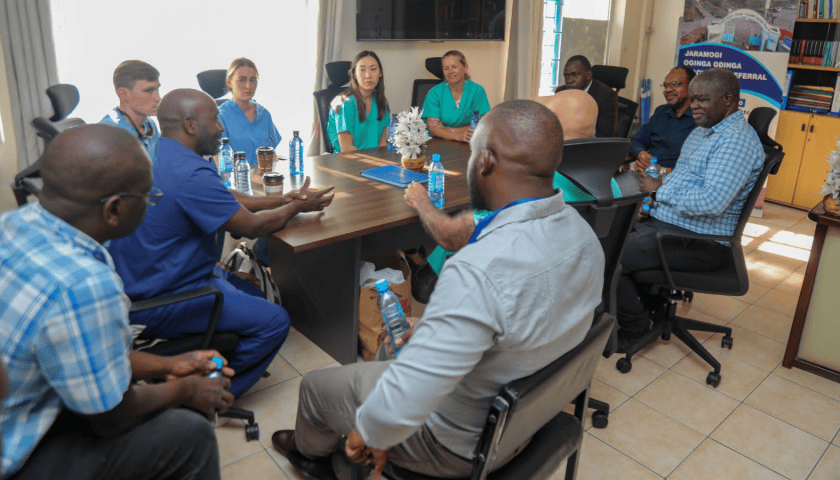
KENYA—Jaramogi Oginga Odinga Teaching and Referral Hospital (JOOTRH) and the Kisumu Neuroscience Initiative have completed 700 brain and spine surgeries since their partnership began in 2017, marking a significant expansion of specialized neurosurgical care in western Kenya.
The partners are now strengthening the programme to increase access to complex neurosurgical procedures while building local capacity to provide specialist care.
As part of this effort, 41 patients have been scheduled for treatment during the ongoing neurosurgical camp, which runs through September 11, 2026.
Expanding specialist training
The latest phase of the partnership includes the Foundation for International Education in Neurological Surgery (FIENS), which is supporting efforts to move the programme beyond periodic surgical camps towards sustained development of local neurosurgical expertise.
International specialists from the United States, including experts from New York, are working alongside JOOTRH clinicians during the camp.
Medical technology company Medtronic is also participating, giving local healthcare professionals opportunities to gain exposure to advanced neurosurgical technologies and techniques.
The partners plan to establish residency and fellowship programmes in neurosurgery to train specialists locally.
They also intend to create opportunities for surgeons and registrars to undertake international training in emerging technologies and surgical techniques before applying their skills in Kenya.
Investing in technology and infrastructure
In addition to training, the collaboration will support the adoption of advanced medical technologies at JOOTRH.
Plans include modernising the hospital’s Health Management Information System with artificial intelligence-assisted clinical decision support capabilities.
The partners are also exploring the future use of robotic-assisted surgery as neurosurgical services become more sophisticated.
Infrastructure improvements will form another part of the programme.
These will include upgrading operating theatres, surgical equipment and beds to provide facilities capable of supporting increasingly complex brain and spine procedures.
Improving patient preparation
The current camp has introduced changes to patient management following delays experienced during previous surgical camps.
Local anaesthesia and surgical teams established dedicated pre-operative screening clinics one week before the camp to assess patients and prepare those eligible for surgery.
The approach is designed to identify patients needing treatment earlier and move them more efficiently from assessment to surgery.
The strengthened collaboration follows a courtesy call by the neurosurgical team to JOOTRH Chief Executive Officer Dr Joshua Clinton Okise.
The hospital and its partners are expected to sign formal Memoranda of Collaboration to strengthen the partnership and support long-term training opportunities for healthcare professionals.
Treating complex neurological conditions
Led by Dr Bethwel Raore, the neurosurgical team is treating patients with conditions including brain tumours such as meningiomas, epilepsy, Chiari malformation, disc herniation, spondylosis, spinal stenosis, spinal fractures, and syringomyelia.
The camp brings together neurosurgeons and other specialists from the United States and JOOTRH.
The collaboration gives patients access to specialized brain and spine care closer to home while allowing local clinicians to gain practical experience with advanced procedures.
With 700 surgeries completed, the partnership is expanding its focus to specialist training, technology adoption, and the development of local capacity for advanced neurosurgical care.

Be the first to leave a comment