Netcare invests in Quro Medical to expand virtual ‘hospital-at-home’ services throughout South Africa
The partnership introduces a new model of care that combines advanced remote monitoring, post-discharge support, and hospital-at-home services, allowing patients to remain connected to healthcare professionals throughout their recovery journey.
Published
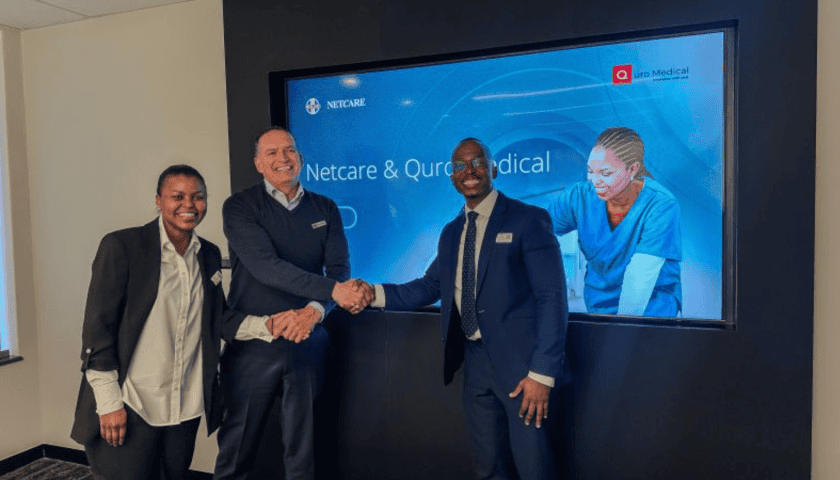
SOUTH AFRICA—Netcare has strengthened its push into digitally enabled healthcare through a strategic investment in Quro Medical, a South African health technology company that is transforming how patients receive care during and after hospitalization.
The partnership introduces a new model of care that combines advanced remote monitoring, post-discharge support, and hospital-at-home services, allowing patients to remain connected to healthcare professionals throughout their recovery journey.
According to Dr Chris G. Mathew, Managing Director of Cancer Care and Business Development at Netcare, healthcare is rapidly evolving beyond the traditional hospital setting.
“Quality medical care no longer ends at the hospital door. It now supports recovery at home when appropriate and keeps patients connected to their healthcare teams every step of the way,” he said.
Founded in 2018 by Dr. Vuyane Mhlomi and Zikho Pali, Quro Medical has emerged as a pioneer in digitally enabled extended care.
The company uses technology-driven solutions to support patients both inside and outside healthcare facilities, helping clinicians make more informed decisions through continuous access to patient data.
Transforming patient monitoring
One of the key innovations introduced through the partnership is continuous patient monitoring using wearable devices.
Traditionally, nurses conduct routine vital-sign checks every few hours, often interrupting patients’ sleep.
Quro’s wearable technology continuously records vital signs and streams the information to clinical teams in real time.
This allows healthcare professionals to identify concerning trends earlier while enabling patients to rest without frequent disruptions.
Dr Mhlomi noted that the approach improves both patient experience and clinical outcomes.
“We are not simply adding technology to healthcare. We are redesigning how care is delivered. Real-time patient data enables healthcare teams to respond more quickly and make informed decisions when they matter most,” he said.
The initiative aligns with Netcare’s broader digital transformation strategy.
The hospital group is also piloting wearable monitoring technology and expanding its use of artificial intelligence and predictive analytics across its healthcare ecosystem.
Netcare reported that its digitisation programme has already generated substantial operational savings while improving patient care delivery.
Supporting patients after discharge
The transition from hospital to home remains one of the most vulnerable periods in a patient’s recovery.
To address this challenge, Quro provides a structured 30-day transitional care programme following discharge.
The programme includes daily patient check-ins, medication management support, symptom monitoring, and rapid access to healthcare advice when concerns arise.
By identifying complications early, the service has helped reduce avoidable hospital readmissions and improve continuity of care.
For many patients, this additional support offers reassurance during a period when they may otherwise feel isolated or uncertain about managing their recovery.
Bringing hospital care into the home
The partnership also expands access to hospital-at-home services for eligible patients.
Under this model, patients can receive acute medical treatment in their own homes while remaining under the supervision of a dedicated clinical team.
Services may include intravenous antibiotic therapy, post-surgical recovery support, chronic disease management, and palliative care.
Continuous remote monitoring and specialised medical equipment ensure that patients receive care comparable to that provided in a hospital setting.
According to Dr Mathew, the model offers significant benefits, particularly for elderly patients and individuals recovering from surgery.
“Patients can receive advanced medical treatment in familiar surroundings, remain close to their families, and recover in an environment that promotes comfort and well-being,” he explained.
Strong patient response and future expansion
Dr Mhlomi said patient feedback has been overwhelmingly positive, with the company achieving a Net Promoter Score exceeding 73.
Patients have highlighted the comfort of recovering at home while still being closely monitored by healthcare professionals.
Families have also welcomed the added reassurance that comes from continuous oversight and immediate access to medical support.
The partnership builds on Netcare’s 2025 acquisition of a controlling stake in Quro Medical for R121 million (US$6.7 million), a move designed to expand the group’s presence in digitally enabled home-based healthcare services.
Looking ahead, Quro plans to expand its capabilities through remote diagnostics, AI-assisted clinical decision support, and population health management tools.
These developments complement Netcare’s ongoing investments in data-driven healthcare and digital innovation, positioning both organisations at the forefront of a growing shift toward more personalised, connected, and patient-centred care.
Sign up HEREto receive our email newsletters with the latest news and insights from Africa and around the world, and follow us on LinkedInfor updates.



Be the first to leave a comment