
WHO allocates 20,000 Ervebo doses for Ebola trial in DRC
The allocation forms part of an initial release of 70,000 Ervebo doses to the Democratic Republic of the Congo (DRC).
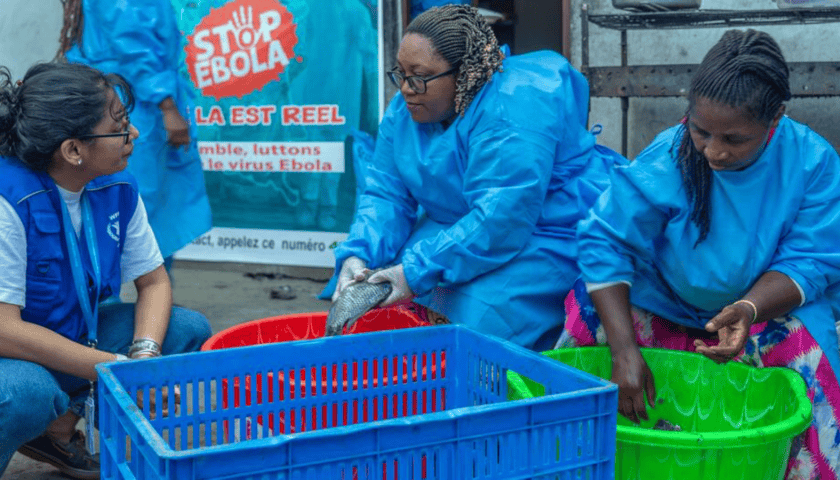
DRC—The World Health Organization (WHO) has announced the allocation of 20,000 doses of the Ervebo vaccine for a Phase 3 clinical trial in Ituri Province to assess whether the vaccine can protect against Ebola disease caused by the Bundibugyo virus.
The allocation forms part of an initial release of 70,000 Ervebo doses to the Democratic Republic of the Congo (DRC).
The remaining 50,000 doses will support vaccination of frontline and healthcare workers in line with current WHO recommendations.
WHO said the research will generate evidence on whether Ervebo, licensed for Ebola disease caused by the Zaire virus, can protect against the Bundibugyo virus. Its effectiveness against the virus in humans remains unknown.
Outbreak remains concentrated in Ituri
Ituri remains the epicentre of the outbreak, although transmission has expanded to six provinces: Ituri, North Kivu, South Kivu, Haut-Uélé, Tshopo and Bas-Uélé.
As of 7 September 2026, the DRC had reported 6,757 confirmed cases and 3,267 deaths.
The outbreak began in Ituri in May 2026 and has since spread across dozens of health zones.
WHO has identified continued geographical expansion, delayed case detection and difficulties accessing timely care among the factors complicating the response.
The response is also taking place amid insecurity and limited healthcare capacity in parts of eastern DRC.
WHO and its partners are supporting surveillance, contact tracing, laboratory testing, clinical care, infection prevention and control, community engagement and preparedness for potential cross-border transmission.
WHO has stressed that community engagement remains an important part of controlling the outbreak because public health measures depend on cooperation from affected communities.
Limited evidence on vaccine protection
Ervebo is administered as a single dose and is licensed for use against Ebola disease caused by the Zaire virus.
However, WHO says there is currently insufficient evidence to determine whether it protects people against Bundibugyo virus disease.
WHO therefore recommends using Ervebo against Bundibugyo virus disease only within a research protocol while evidence of its effectiveness is generated.
The organization has also said that any vaccination programme should clearly communicate the uncertainty surrounding the vaccine’s protection against the virus.
Ebola disease is a severe illness that can affect humans and other primates.
The virus can spread from infected animals to people and subsequently between people through direct contact with blood, secretions, organs or other bodily fluids.
Contaminated bedding and clothing can also transmit the virus.
According to WHO, the average case fatality rate for Ebola disease is about 50%, although rates have ranged from 25% to 90% in previous outbreaks.
The 2014 to 2016 Ebola outbreak in West Africa was the largest and most complex Ebola outbreak recorded at the time.
It caused more cases and deaths than all previous outbreaks combined and spread across Guinea, Sierra Leone, and Liberia.

Be the first to leave a comment