Africa CDC partners with FHI 360 to strengthen health security across the continent
The partnership will also support digital transformation, institutional capacity-building, and integrated health systems that promote sustainability and national ownership.
Published
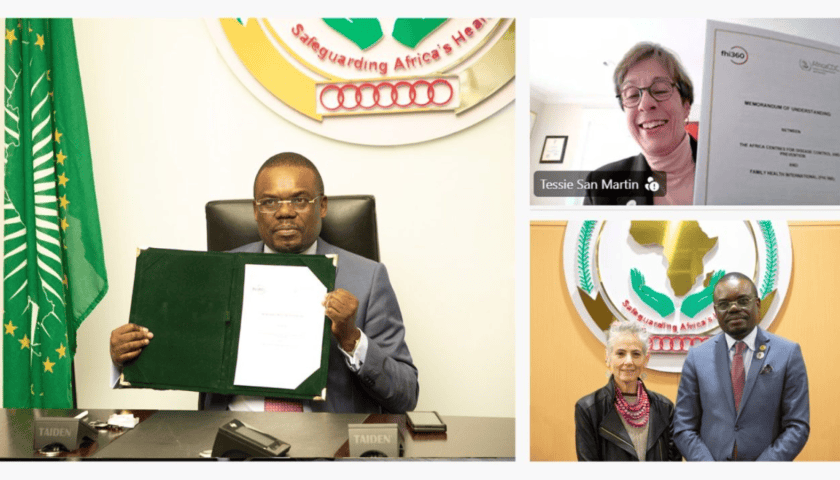
ETHIOPIA—The Africa Centres for Disease Control and Prevention (Africa CDC) and FHI 360 have signed a Memorandum of Understanding (MoU) to advance health security, workforce development, and resilient public health systems across Africa.
The MoU establishes a structured framework of cooperation that aligns with the Africa CDC Strategic Plan (2023–2027), the Africa Health Security and Sovereignty (AHSS) Agenda, and the Lusaka Agenda.
This partnership reinforces shared commitments to sustainable, locally driven health systems and preparedness throughout the continent.
Africa CDC and FHI 360 will collaborate to strengthen surveillance systems, epidemic intelligence, laboratory networks, health workforce capacity, and emergency preparedness and response capabilities.
The partnership will also support digital transformation, institutional capacity-building, and integrated health systems that promote sustainability and national ownership.
Building self-reliant health systems
H.E. Dr Jean Kaseya, Director-General of Africa CDC, emphasized that strengthening Africa’s health security demands partnerships built on mutual accountability and results.
The MoU with FHI 360 strengthens the organization’s commitment to support African Union Member States in building resilient, self-reliant systems that can prevent, detect, and respond to public health threats.
Dr Kaseya noted that the partnership accelerates national ownership and sustainable financing for preparedness while advancing the broader vision of health sovereignty across the continent.
Decades of Global Health Experience
FHI 360, a global nonprofit organization working in more than 50 countries, brings decades of experience in infectious disease control, surveillance systems, laboratory strengthening, data platforms, and workforce development.
The partnership reflects a shared commitment to supporting African Union Member States in building integrated, efficient, and sustainable public health systems.
Dr Tessie San Martin, CEO of FHI 360, said that for more than five decades, FHI 360 has worked alongside governments and civil society in countries across Africa to respond to health threats and promote strong and resilient health systems.
The organization shares Africa CDC’s vision of a safer, healthier, and more prosperous Africa.
Strengthening national capabilities
Dr San Martin highlighted that fulfilling this vision requires strengthening national capabilities to detect and respond to public health emergencies.
The partnership will focus on strengthening domestic health financing, workforce development, and manufacturing capacity, which form the foundation of continental health sovereignty and promote African autonomy and preparedness.
The collaboration will align with evolving global health security frameworks and reinforce efforts to transition toward country-led, government-to-government engagement.
The partnership will support integrated data systems, private sector engagement, and performance-linked financing models that strengthen accountability and sustainability.
By formalizing this partnership, Africa CDC and FHI 360 reaffirm their commitment to expanding institutional capacity, promoting innovation, and supporting Member States in advancing health security, economic resilience, and continental self-reliance.
Sign up HEREto receive our email newsletters with the latest news and insights from Africa and around the world, and follow us on LinkedInfor updates.



Be the first to leave a comment