JHAH introduces advanced fusion-guided prostate biopsy technology to improve early cancer detection in Saudi Arabia
The new diagnostic approach aligns with recommendations from the European Association of Urology and the American Urological Association.
Published
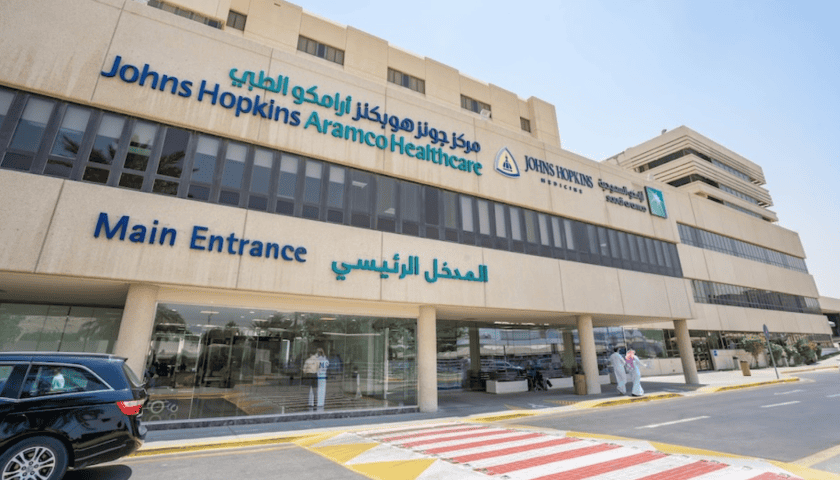
SAUDI ARABIA—Johns Hopkins Aramco Healthcare (JHAH) has become the first hospital in Saudi Arabia’s Eastern Province to offer MRI-ultrasound fusion-guided prostate biopsy using the transperineal approach, a combination available at only a limited number of hospitals worldwide.
The new service is expected to strengthen prostate cancer diagnosis in a region that continues to record the highest incidence of the disease in the Kingdom.
According to data from the Saudi Cancer Registry, the Eastern Province has consistently reported the highest rates of prostate cancer nationwide.
The Saudi Health Council’s 2023 Cancer Incidence Report also identified prostate cancer as the second most commonly diagnosed cancer among Saudi men, accounting for 7.6% of all cancers diagnosed in this population.
Despite this, many cases are still detected at advanced stages, making treatment more challenging and reducing the likelihood of favourable outcomes.
To help address this challenge, JHAH has introduced a technology that combines detailed prostate MRI scans with real-time ultrasound imaging.
This allows physicians to identify suspicious lesions with greater precision and target them directly during biopsy procedures rather than relying on random tissue sampling.
Improving accuracy while reducing risks
The new diagnostic approach aligns with recommendations from the European Association of Urology and the American Urological Association.
Research supporting these guidelines has shown that targeted biopsies can detect nearly 30% more clinically significant prostate cancers while reducing the diagnosis of low-risk cancers that may lead to unnecessary treatment by approximately 17%.
In addition, JHAH is using the transperineal biopsy technique, in which the biopsy needle passes through the skin between the scrotum and anus rather than through the rectum.
This method significantly lowers the risk of infection and sepsis commonly associated with traditional transrectal biopsies.
It also reduces the need for preventive antibiotic use and provides better access to areas of the prostate that conventional methods can sometimes miss.
Because the procedure requires fewer tissue samples, patients often experience less discomfort and face a lower risk of complications.
Hospital leaders believe these advantages could encourage more men to seek screening and evaluation earlier, particularly in a region where late-stage diagnosis remains common.
Dr. Tareq Al-Tartir, Consultant Urologist at JHAH, said the technology enables physicians to provide highly reliable diagnoses while minimizing patient discomfort and procedural risks.
“Detecting significant prostate cancer accurately and at an earlier stage can dramatically improve treatment options and outcomes,” he said. “This is precision medicine delivering meaningful benefits for patients.”
Expanding precision oncology services
The new biopsy capability is one of the first services introduced through JHAH’s Oncology Center of Excellence, which was established in partnership with Johns Hopkins Medicine’s Sidney Kimmel Comprehensive Cancer Center.
The center focuses on breast, colorectal, and prostate cancers while bringing internationally recognized diagnostic and treatment standards to Saudi Arabia.
The prostate cancer program also offers advanced multiparametric MRI imaging, fusion-guided biopsies, robotic-assisted surgery, and access to precision medicine approaches.
The launch follows a series of recent investments by JHAH aimed at strengthening specialized healthcare services.
In April, the organization opened a new PET/CT facility to enhance cancer diagnosis, treatment planning, and disease monitoring through advanced imaging technologies.
Hospital leaders said the addition supports faster and more accurate clinical decision-making across oncology and other specialties.
Dr. Howard Podolsky, Chief Executive Officer of JHAH, said the introduction of MRI-ultrasound fusion biopsy reflects the organization’s commitment to advancing precision medicine and delivering patient-centered care.
“By investing in advanced technology and world-class procedures, we are improving diagnostic accuracy and helping redefine the standard of prostate cancer care in the region,” he said.
The initiative also supports Saudi Arabia’s Vision 2030 Health Sector Transformation Program by expanding access to advanced cancer services within the Kingdom and reducing the need for patients to seek specialized care abroad.
JHAH encourages men aged 50 years and older, as well as those aged 45 and above with a family history of prostate cancer, to discuss screening and prostate health with their healthcare providers.
Sign up HEREto receive our email newsletters with the latest news and insights from Africa and around the world, and follow us on LinkedInfor updates.




Be the first to leave a comment