

ADPHC signs agreement with Ultrahuman to advance healthy ageing research in Abu Dhabi
The initiative aims to help individuals understand how cardiovascular health, sleep, metabolism and physical recovery influence ageing and long-term health.
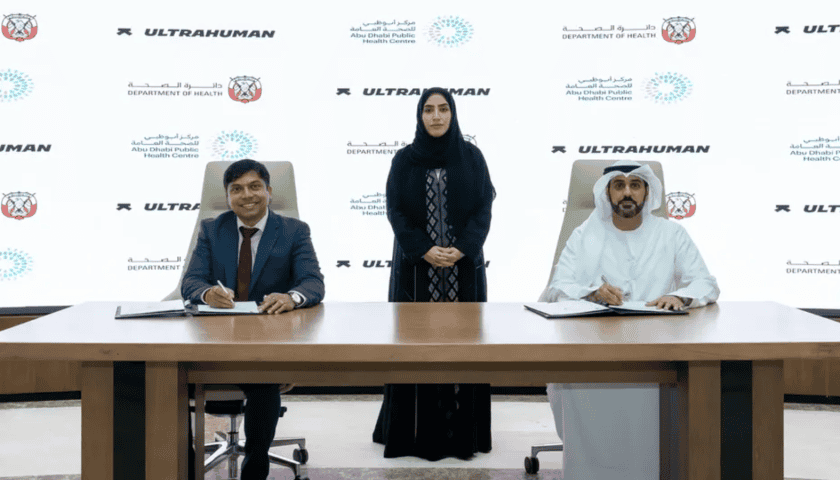
UAE—The Abu Dhabi Public Health Centre (ADPHC) has signed a two-year agreement with Ultrahuman Healthcare SP LLC to develop and validate a biological health age model that combines clinical biomarkers with wearable health data to support preventive healthcare.
The initiative aims to help individuals understand how cardiovascular health, sleep, metabolism, and physical recovery influence ageing and long-term health.
The model will combine clinical measurements with continuous health data from wearable devices to provide more personalised insights and inform strategies for earlier intervention.
Combining clinical and wearable health data
Unlike chronological age, which measures how many years a person has lived, biological health age uses health indicators to assess the body’s condition and ageing process.
Integrating clinical and wearable data could provide a broader view of individual health patterns and help identify factors associated with future health risks.
The initiative reflects a wider shift in healthcare towards prevention, risk prediction and early intervention.
As life expectancy increases, health systems face growing pressure to help people stay healthy longer, rather than focus solely on extending lifespan.
Wearable devices can track indicators such as heart rate, sleep patterns and activity levels, while clinical assessments provide additional information about an individual’s health.
Combining these sources could support more informed health assessments, although the model’s accuracy and clinical usefulness will depend on scientific validation and the quality of the data used.
Dr Faisal Al Ahbabi, Executive Director of Communicable Diseases at ADPHC, and Mohit Kumar, Founder and Chief Executive Officer of Ultrahuman Healthcare SP LLC, signed the agreement in Abu Dhabi.
Two-year framework for research and validation
Under the agreement, the organisations will conduct joint scientific research, undertake clinical validation and establish arrangements for the responsible use of health data.
They have also committed to keeping all data within Abu Dhabi, with confidentiality measures, governance frameworks, clinical oversight and privacy protections guiding the collaboration.
These safeguards will matter as public health authorities and technology companies explore ways to use personal health information for research and preventive care.
Developing the model will require assessing its performance across different populations, along with clear protocols for interpreting results and communicating health risks.
Dr Rashed Alsuwaidi, Director General of ADPHC, said public health was shifting from a primary focus on disease management towards prediction, prevention and early intervention.
He added that understanding population ageing and identifying factors associated with healthy longevity were important to this transition.
The collaboration, he said, would strengthen the centre’s ability to generate evidence, develop public health tools and translate data into practical insights for communities across Abu Dhabi.
Supporting Abu Dhabi’s digital health strategy
Kumar said the partnership offered an opportunity to combine continuous health monitoring with Abu Dhabi’s public health infrastructure.
He added that the emirate provided an environment to develop and validate health innovations at population scale, and that Ultrahuman was pleased to work with ADPHC on the initiative.
The project builds on Abu Dhabi’s investments in genomics, digital health, preventive health programmes and population health infrastructure.
It also reflects a growing interest among health authorities in using data analytics and connected technologies to identify health risks and tailor prevention strategies.
For the healthcare industry, combining wearable data with clinical measurements could create new opportunities for population health research and personalised prevention.
However, translating these insights into routine healthcare will depend on validation, data governance and evidence that the model can support meaningful health decisions across different groups.
The two-year collaboration will establish a framework for research and clinical validation while keeping health data within the emirate under the agreed privacy and governance arrangements.


Be the first to leave a comment