

GCC Aesthetic Medicine training evolves as demand for clinical expertise grows
Across Dubai, Doha, Riyadh, Muscat and other Gulf cities, physicians, dentists, nurses and other eligible healthcare professionals are encountering an increasingly diverse range of aesthetic treatments.
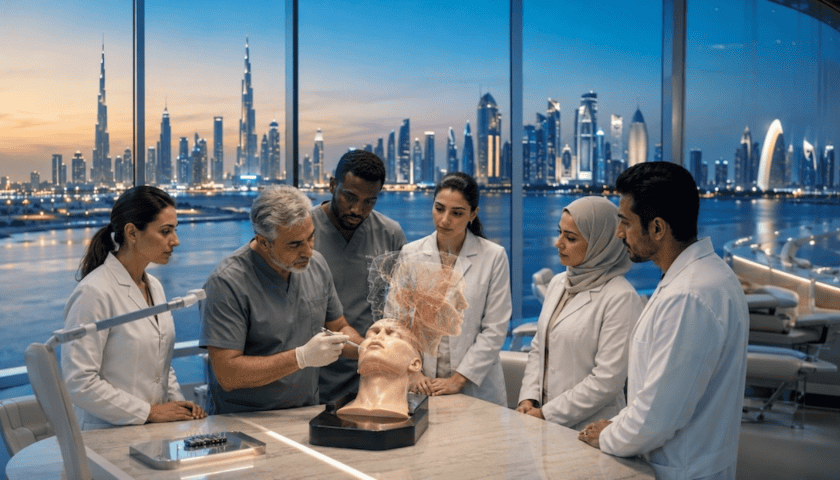
UAE—Aesthetic medicine in the Gulf is entering a more mature phase as the rapid growth of clinics, patient demand, and non-surgical cosmetic procedures shifts attention towards another critical area: the training and clinical competence of healthcare professionals.
Across Dubai, Doha, Riyadh, Muscat and other Gulf cities, physicians, dentists, nurses and other eligible healthcare professionals are encountering an increasingly diverse range of aesthetic treatments.
However, mastering individual techniques is only one part of the challenge.
As the sector evolves, practitioners also need strong knowledge of anatomy, patient assessment, treatment planning, complication prevention and clinical decision-making.
A diverse but connected regional market
The Gulf is not a single aesthetic medicine market.
Dubai has emerged as an internationally recognised destination for aesthetic procedures, supported by a large private healthcare sector and diverse international workforce.
Doha is continuing to expand its healthcare and medical education ecosystem, while Saudi Arabia has a large and rapidly developing healthcare market.
Despite these differences, the markets share several trends.
Patients have greater access to information, social media can rapidly popularise treatment trends, and practitioners are increasingly exposed to techniques and technologies developed in other parts of the world.
However, the popularity of a procedure can sometimes grow faster than the clinical expertise needed to deliver it safely and appropriately.
As a result, aesthetic medicine education in the Gulf Cooperation Council (GCC) is increasingly moving beyond isolated demonstrations towards broader clinical training.
Moving beyond technique
Aesthetic procedures may appear relatively simple, but they can require considerable clinical knowledge.
Even a short injectable treatment can involve an understanding of facial anatomy, vascular structures, product characteristics, injection depth, patient selection, contraindications and potential complications.
Consequently, technical ability cannot be separated from clinical judgment.
Practitioners must understand not only how to perform a procedure but also when it is appropriate, which patients are suitable and how to respond when complications occur.
Online education has made medical knowledge more accessible, allowing healthcare professionals across the Gulf to study theory and observe procedures without travelling abroad.
However, procedural medicine presents an important limitation: watching a procedure does not necessarily prepare a practitioner to perform it independently.
Supervised practical training can help bridge this gap.
Hands-on aesthetic medicine education allows healthcare professionals to develop procedural skills while applying anatomical and clinical knowledge under supervision.
Online and in-person education can therefore complement rather than replace each other.
Practitioners can study theoretical concepts remotely, while procedural competencies can benefit from supervised practical experience.
Dubai and Doha expand regional training access
Dubai’s international healthcare workforce gives the city a distinctive position within the regional aesthetics sector.
Practitioners trained under different medical systems often work within the same market, creating opportunities for knowledge exchange while also increasing the need for common approaches to patient assessment, safety and complication management.
Dubai’s accessibility also allows healthcare professionals from neighbouring countries to attend regional training without travelling to Europe or North America.
A similar development is taking place in Qatar.
As Doha’s healthcare and professional education ecosystem expands, practitioners have increasing opportunities to access specialised training closer to their workplaces.
The Canadian Board of Aesthetic Medicine (CBAM), for example, has extended aspects of its medical aesthetics education activities into the GCC.
This reflects a broader shift in which international medical education organisations are increasingly bringing professional training into the region rather than requiring Gulf-based practitioners to travel overseas.
Saudi Arabia could further accelerate this trend as its healthcare sector expands and demand for specialised professional education increases.
Aesthetic medicine broadens its scope
The changing educational landscape also reflects the growing diversity of aesthetic medicine itself.
Injectable treatments remain an important area of training, but practitioner interest is also expanding into regenerative approaches, platelet-rich plasma (PRP), skin rejuvenation, ultrasound and other technology-assisted procedures.
These developments increase the importance of critical appraisal.
New treatments and products can attract significant attention before sufficient clinical evidence or consensus emerges to establish their appropriate use.
As a result, future training will need to cover more than procedural techniques. Practitioners will also need to learn how to assess evidence, select appropriate patients and recognise the limitations of emerging treatments.
Regional regulations remain important
Although clinical principles can be applied across borders, regulations vary between jurisdictions.
Scope of practice, licensing requirements and professional standards differ across GCC countries, meaning healthcare professionals remain responsible for understanding and complying with the rules governing their practice location.
Regional training centres can improve access to professional education, but not every healthcare professional can regularly travel to Dubai, Doha or another major city.
Online education therefore continues to have an important complementary role.
Foundational theory, treatment principles, anatomy, patient assessment frameworks and other knowledge-based components can be studied remotely, allowing practitioners to build their expertise regardless of location.
Healthcare professionals seeking flexible remote education can also explore online aesthetic medicine courses offered through CBAM’s international education platform and other medical education providers.
The key consideration is therefore not simply whether training takes place online or in person, but whether the educational format is appropriate for the competency being taught.
Training evolves with the sector
As aesthetic medicine across the Gulf becomes more sophisticated, professional education is also evolving.
Training programmes are placing greater emphasis on anatomy, clinical reasoning, evidence appraisal, patient selection, complication prevention and supervised practical experience alongside procedural techniques.
Dubai, Doha, Riyadh, and other Gulf cities may develop at different speeds, but practitioners, technologies and ideas increasingly connect these markets.
This is creating new opportunities for healthcare professionals to access specialised aesthetic medicine education within the region.

Be the first to leave a comment