

UN Treaty on older persons must protect long-term HIV survivors, advocates urge
In 2025, an estimated 11.5 million people living with HIV worldwide were aged 50 and above, representing approximately 29% of the global population living with the virus.
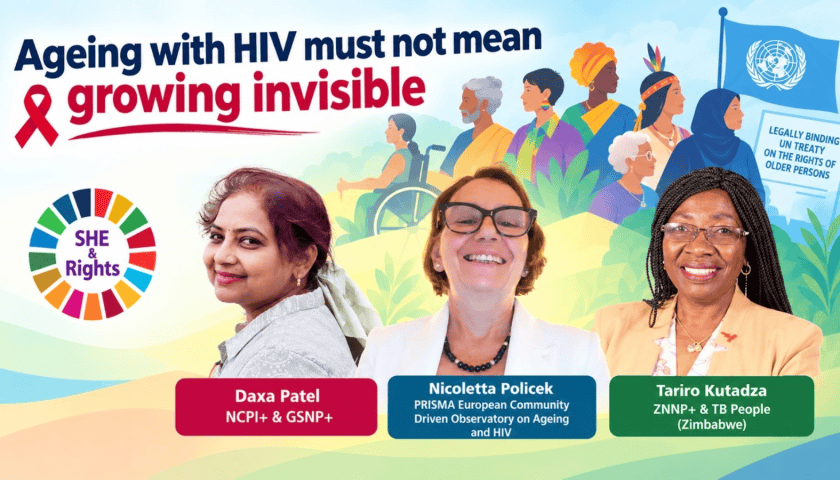
GLOBAL—Community advocates are calling for a legally binding United Nations treaty on the human rights of older persons to protect people ageing with HIV from discrimination, fragmented healthcare, financial insecurity and social exclusion.
As antiretroviral therapy (ART) enables more people living with HIV to live longer, many face new challenges in accessing age-appropriate healthcare, social protection and long-term care.
Advocates say the international legal framework must guarantee dignity, gender equality and government accountability throughout old age.
The changing age profile of the HIV epidemic reflects decades of scientific progress, activism and community-led access to lifesaving treatment.
Effective ART can suppress HIV to undetectable levels, preventing sexual transmission of the virus.
This principle, known as undetectable equals untransmittable (U=U), has transformed the lives of millions of people living with HIV.
However, longer life expectancy has brought a growing need to address the social, economic and health inequalities that can undermine the benefits of treatment.
“We are really addressing a very important moment in history, which is the time where people living with HIV have the opportunity to age,” said Nicoletta Policek, who has lived with HIV for 42 years and co-founded and directs the PRISMA European Community Driven Observatory on Ageing and HIV.
For Policek, longer life expectancy represents more than a medical achievement. It reflects collective action, solidarity and the sustained efforts of communities advocating for access to treatment and care.
In 2025, an estimated 11.5 million people living with HIV worldwide were aged 50 and above, representing approximately 29% of the global population living with the virus.
This number is projected to rise to 20.2 million, or 51% of all people living with HIV, by 2040.
Although effective treatment has extended lives, people ageing with HIV may experience multiple chronic conditions, functional limitations and other health challenges.
Some studies also associate HIV with an increased risk of certain age-related conditions, although the effects vary depending on treatment, other health factors and individual circumstances.
These challenges mean that controlling the virus alone is not enough.
Older people living with HIV may also need ongoing care for hypertension, diabetes, cardiovascular disease and other non-communicable diseases, alongside mental health support, rehabilitation and services that maintain mobility and social connection.
Community advocates call for person-centred healthcare
These issues featured in a SHE & Rights panel hosted by the Global Center for Health Diplomacy and Inclusion (CeHDI) and CNS, in collaboration with the Global Alliance for the Rights of Older Persons (GAROP), the Global Network of People living with HIV (GNP+), the International Planned Parenthood Federation (IPPF), the Asian-Pacific Resource and Research Centre for Women (ARROW) and APCAT Media.
Speaking from her lived experience, Tariro Kutadza, Advocacy Lead at the Zimbabwe National Network of People living with HIV (ZNNP+) and a founding leader of TB People Zimbabwe, described the difficulties older people face when managing multiple health conditions while confronting stigma, isolation and limited treatment options.
“Living longer is an achievement. Ageing well is the next goal,” she said.
Achieving that goal requires healthcare systems to move beyond measuring success primarily through viral suppression. Instead, services must address the full range of health and social needs that emerge throughout a person’s life.
Daxa Patel, co-founder and former president of the National Coalition of People living with HIV in India (NCPI+) and a leader of the Gujarat State Network of People living with HIV (GSNP+), highlighted the difficulties people encounter when navigating fragmented healthcare and social protection systems.
In India, older people living with HIV may have to navigate multiple medical departments, provide extensive documentation and meet different eligibility requirements to access benefits intended for older persons.
Patel also pointed to gaps in health insurance and social protection arrangements tailored to their needs.
When people cannot access essential services, the existence of a benefit in law or policy does not necessarily guarantee that they can exercise that right in practice.
Gender inequality deepens the challenges of ageing with HIV
The experience of ageing with HIV varies according to gender, disability, income, sexual identity and social circumstances.
These factors can influence access to healthcare, financial independence and participation in decisions about treatment and support.
Older women who have spent years providing unpaid care may reach retirement without adequate savings or financial security. Women living with HIV can also face stigma, economic dependence and limited influence over household or healthcare decisions.
Meanwhile, transgender and gender-diverse older people may experience discrimination in healthcare, housing and residential care settings.
Low literacy, inaccessible information and complicated administrative procedures can further prevent marginalised groups from accessing essential services.
Policek said social exclusion can leave older people feeling invisible, even when they need support and want to participate in decisions affecting their lives.
“I do not want to be invisible in social care. I do not want to be invisible when it comes to advocating for my own rights,” she said.
Her concerns highlight the need to recognise older people living with HIV as rights-holders rather than merely as patients, dependants or recipients of charitable assistance.
“Age is political,” Policek argued, pointing to the decisions governments make about public spending, service delivery and the distribution of resources that determine whether people can age with dignity.
Funding pressures threaten support for long-term HIV survivors
Advocates have also raised concerns about the sustainability of services for people who have lived with HIV for decades.
As international aid budgets face pressure and governments reassess domestic spending priorities, long-term survivors risk receiving less attention if programmes increasingly focus on younger populations and HIV prevention.
Kutadza stressed that discussions about integrating services, sustaining programmes and transitioning to domestic financing must reflect the practical needs of older people living with HIV.
The burden of other infectious diseases also requires attention. Ahead of the Union World Conference on Lung Health in Rio de Janeiro, Brazil, advocates highlighted the increased risk of tuberculosis (TB) among older people, particularly those living with HIV.
Older age and HIV infection are both associated with a higher risk of TB disease, making timely screening, diagnosis and treatment important components of care.
Patel called for stronger peer-support networks led by people living with HIV, alongside community-led monitoring to document discrimination, healthcare refusals and barriers to government benefits.
These networks can help people navigate referrals, maintain treatment, manage social isolation and challenge discriminatory practices.
However, community participation must complement rather than replace government responsibility. Policek emphasised that meaningful participation requires sustained funding, training, accessible procedures, fair compensation and safeguards to protect participants’ identities.
Governments cannot expect underfunded community organisations and unpaid volunteers to compensate for weaknesses in public healthcare and social protection systems.
Proposed UN treaty must address HIV-related discrimination
The UN Human Rights Council is developing a legally binding international instrument to strengthen the protection of older persons’ human rights.
Advocates say the process offers an opportunity to address the specific challenges facing people who grow older with HIV.
They want the treaty to move beyond general commitments and explicitly address the combined effects of ageism, HIV-related stigma, gender inequality and other forms of discrimination.
The proposed instrument should require governments to protect older people against discrimination based on age and HIV status in healthcare, insurance, employment, housing, social protection and long-term care.
It should also address intersecting discrimination affecting older women, transgender and gender-diverse people, people with disabilities and other marginalised groups.
Access to affordable, quality healthcare should include HIV treatment and medicines, routine screening for other chronic conditions, mental healthcare, rehabilitation and palliative care when needed.
The treaty should also safeguard privacy and medical confidentiality. Unauthorised disclosure of a person’s HIV status can expose them to discrimination, abuse and exclusion, particularly in settings where stigma remains widespread.
Beyond healthcare, advocates want governments to ensure access to adequate pensions, income support, affordable housing and social protection.
Administrative procedures should not prevent people from accessing benefits because they lack documentation, literacy, digital access or the resources needed to navigate multiple government departments.
The proposed treaty should also establish protections against neglect, financial exploitation, coercion and gender-based violence, alongside effective mechanisms for reporting abuse and obtaining remedies.
Older people living with HIV and their representative community-led organisations should have a meaningful role in designing policies, setting budgets, evaluating services and monitoring implementation.
Community-led evidence can strengthen government accountability
Policek, Kutadza and Patel share the view that policies developed without the participation of older people living with HIV are unlikely to reflect the realities of their lives.
Community-led evidence can expose problems that conventional health indicators may overlook, including people denied admission to care facilities, women unable to claim pensions and patients forced to repeatedly disclose sensitive information across disconnected services.
Such evidence must also inform public accountability. Policek identified the UN Universal Periodic Review (UPR) as one avenue for examining how governments protect the rights of older people living with HIV.
Civil society organisations and community networks can use documented cases of discrimination, breaches of confidentiality, barriers to social protection and fragmented healthcare to inform national consultations and relevant UPR submissions.
The HIV movement has demonstrated how collective advocacy, peer support and community leadership can influence public policy and improve access to treatment.
Advocates want these approaches to inform international efforts to protect the rights of people who have lived with HIV for decades.
They argue that growing older should not mean losing access to healthcare, financial security, personal autonomy or the opportunity to participate in public life.
A legally binding treaty could establish international standards against which governments’ obligations to protect older persons are assessed, including the needs of those ageing with HIV.


Be the first to leave a comment