
EGHS Conference 2026 draws 800 healthcare professionals to Dubai
The conference attracted specialists from healthcare institutions, universities and research centres in the UAE, Saudi Arabia, Oman, Kuwait, India, the United States and Türkiye.
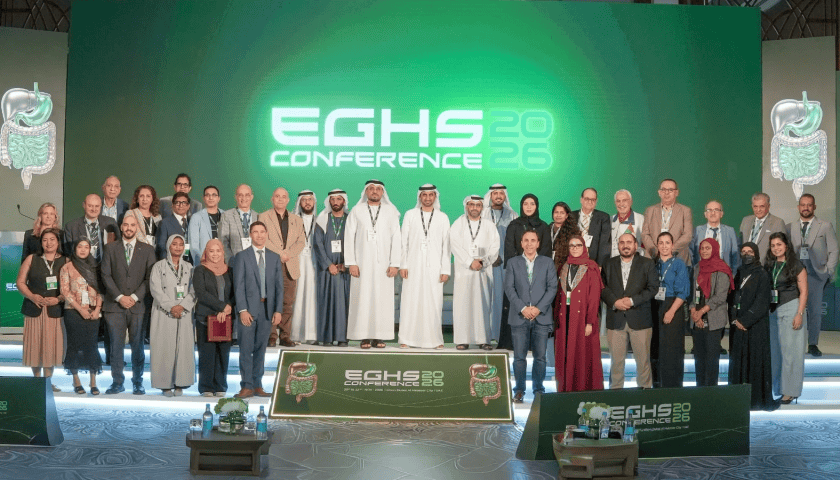
UAE—The Emirates Gastroenterology & Hepatology Society (EGHS) has concluded its 2026 conference at Hilton Dubai Al Habtoor City, bringing together more than 800 healthcare professionals to discuss advances in gastrointestinal and liver disease management and improve clinical practice.
The three-day event concluded on November 22 attracted physicians, specialists and researchers from the UAE, Gulf Cooperation Council (GCC) countries and international markets.
Its programme featured scientific discussions, specialised sessions and practical workshops covering emerging diagnostic approaches, treatment options and developments in endoscopy.
Sheikha Dr Noura Al Qassimi, President of the Emirates Medical Association (EMA), inaugurated the conference.
Before the main programme, EGHS held specialised workshops on November 20 to strengthen practical skills in gastroenterology, hepatology and endoscopy.
Focus on clinical practice and advanced endoscopy
The scientific programme covered inflammatory bowel disease (IBD), liver conditions, gastrointestinal motility and functional disorders, and advances in the diagnosis and treatment of digestive diseases.
Participants also examined advanced therapeutic endoscopy techniques, including endoscopic ultrasound, gastrointestinal lesion resection, bleeding management and the removal of tumours and polyps.
These practical sessions gave physicians opportunities to develop their technical skills and explore the application of newer procedures in patient care.
Dr Abdulla Al Hassani, President of EGHS, said the conference demonstrated the UAE’s capacity to host specialised medical meetings and facilitate knowledge exchange among international experts.
He noted that the scientific sessions and practical workshops helped participants examine developments in gastrointestinal and liver disease management and consider how emerging medical knowledge could translate into better clinical practices.
Recommendations target diagnosis and multidisciplinary care
The conference produced scientific recommendations calling for stronger early detection of gastrointestinal and liver diseases, integrated treatment pathways for patients with IBD and wider adoption of advanced endoscopic procedures.
The recommendations also emphasised continuous professional training, greater use of evidence-based clinical guidelines and stronger collaboration among gastroenterologists, hepatologists, surgeons, radiologists and other specialists.
Such cooperation can improve diagnostic accuracy and support more appropriate treatment decisions for patients with complex conditions.
Other priorities included preventing diabetes-related complications affecting the digestive system and liver through early detection, routine medical follow-up and healthier lifestyles.
Participants also highlighted adherence to recommended vaccinations, particularly among patients at higher risk of infections and related complications.
The recommendations further addressed paediatric gastrointestinal conditions, motility disorders and the management of complex cases.
They encouraged medical institutions in the UAE and other countries to expand professional exchanges and research collaboration.
Regional and international participation
The conference attracted specialists from healthcare institutions, universities and research centres in the UAE, Saudi Arabia, Oman, Kuwait, India, the United States and Türkiye.
This international participation provided opportunities to discuss clinical challenges, share research findings and explore medical technologies.
It also supported professional networks that can facilitate knowledge transfer and strengthen specialist healthcare services across the region.
For the UAE healthcare sector, continued investment in specialist medical education and clinical collaboration supports the development of advanced diagnostic and treatment capabilities.
These priorities are particularly relevant as healthcare providers respond to the growing burden of chronic gastrointestinal and liver conditions.
EGHS organises the conference as part of its ongoing medical education, research and professional development activities.
Wiredin Events, a UAE-based organiser of medical, scientific and corporate events, coordinated the conference.
Be the first to leave a comment