
Tanzania, Namibia presidents champion maternal health at 2026 UN General Assembly
The event was co-hosted by the permanent missions of Tanzania, Qatar, Saudi Arabia and Indonesia, alongside The Access Challenge.
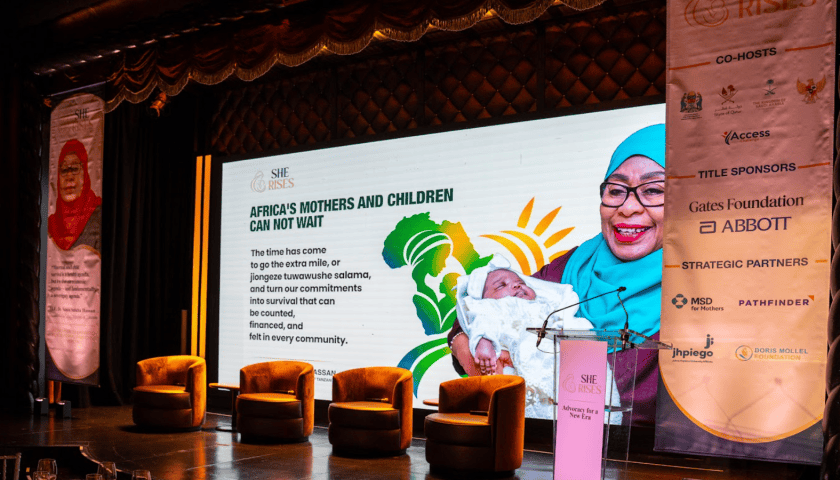
USA—Tanzania’s President Samia Suluhu Hassan and Namibia’s President Netumbo Nandi-Ndaitwah have called for stronger political commitment to maternal and child health at a leadership event held in New York on September 24, 2026, on the sidelines of the 81st United Nations General Assembly (UNGA).
The event, titled SHE RISES: Advocacy for a New Era: The Women Leading Maternal and Child Health for All, brought together government representatives, global health institutions and development partners to promote investment in maternal and child survival.
President Samia, Tanzania’s African Union (AU) Champion for Maternal and Child Health, was represented by Vice President Deogratius John Ndejembi, while President Nandi-Ndaitwah attended in person.
The event was co-hosted by the permanent missions of Tanzania, Qatar, Saudi Arabia and Indonesia, alongside The Access Challenge.
Tanzania reports progress in maternal health
Tanzania’s maternal mortality ratio declined from 556 deaths per 100,000 live births in 2015–2016 to 104 in 2022, an approximately 81% reduction.
Skilled birth attendance also increased from 66% to 85% over the same period.
The progress reflects investments in emergency obstetric and newborn care, referral systems and healthcare workers, alongside initiatives such as m-mama, which connects women experiencing obstetric emergencies with transport to health facilities.
President Samia’s commitment to maternal health dates back to November 2018, when she helped launch the Jiongeze Tuwavushe Salama national campaign as Vice President.
In February 2025, the Gates Foundation recognised her with the Global Goalkeeper Award for Tanzania’s progress in maternal, newborn and child health and nutrition.
The AU subsequently appointed her Champion for Maternal and Child Health in February 2026.
Addressing the gathering through a recorded message, President Samia described maternal and child survival as a health, economic and sovereignty priority, calling for African countries to strengthen domestic investment in healthcare systems.
Delivering the keynote address, Vice President Ndejembi said Tanzania’s experience demonstrated how presidential leadership and domestic financing could accelerate improvements in maternal and child health.
He also pledged to share the country’s experience with other African nations.
Tanzania’s Ambassador and Permanent Representative to the UN, Togolani Edriss Mavura, highlighted the role of diplomacy and international cooperation in extending these gains beyond the country.
Global health financing and leadership in focus
President Nandi-Ndaitwah pledged Namibia’s support for President Samia’s AU mandate, emphasising the responsibility of women leaders to improve health outcomes for mothers and children across Africa.
The gathering also featured discussions on global health governance and sustainable financing.
A panel involving Indonesia’s Health Minister Budi Gunadi Sadikin, WHO Regional Director for the Eastern Mediterranean Hanan Balkhy and Qatar’s senior public health adviser Hanan Mohammed Al-Kuwari examined how future WHO leadership could prioritise maternal and child health.
Another session, She Needs Capital, Not Charity, brought together leaders from Jhpiego, Pathfinder International and MSD for Mothers to advocate for financing that strengthens nationally led healthcare systems rather than relying on short-term projects.
Participants included UNFPA Executive Director Diène Keita, WHO Regional Director for Africa Mohamed Yakub Janabi, AU Commissioner for Health Amma A. Twum-Amoah and Tanzania’s Health Minister Mohamed Omary Mchengerwa.
The Gates Foundation and Abbott Fund sponsored the event, with additional support from MSD for Mothers, Pathfinder International, Jhpiego and the Doris Mollel Foundation.
The Access Challenge CEO Asad Lilani said the initiative aimed to translate political commitment into sustained support for maternal and child health programmes.
An estimated 260,000 women died from pregnancy and childbirth-related causes in 2023, with more than 90% of deaths occurring in low-income and lower-middle-income countries, according to global maternal mortality estimates.


Be the first to leave a comment